View and Download GFiber Nutrition Labels
For more information on Core 1 Gig features and benefits, read Getting the most out of GFiber Core 1 Gig. 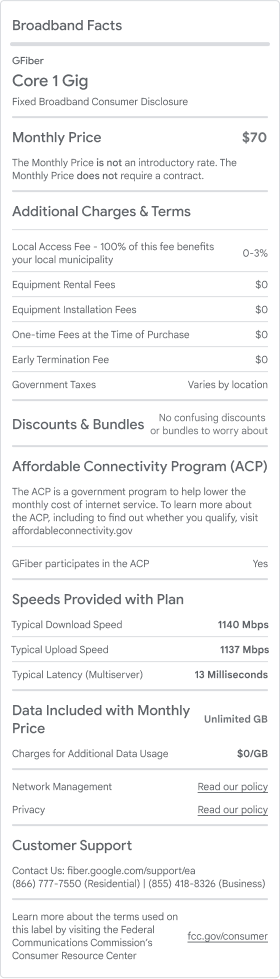
For more information on Home 3 Gig features and benefits, read Getting the most out of GFiber Home 3 Gig. 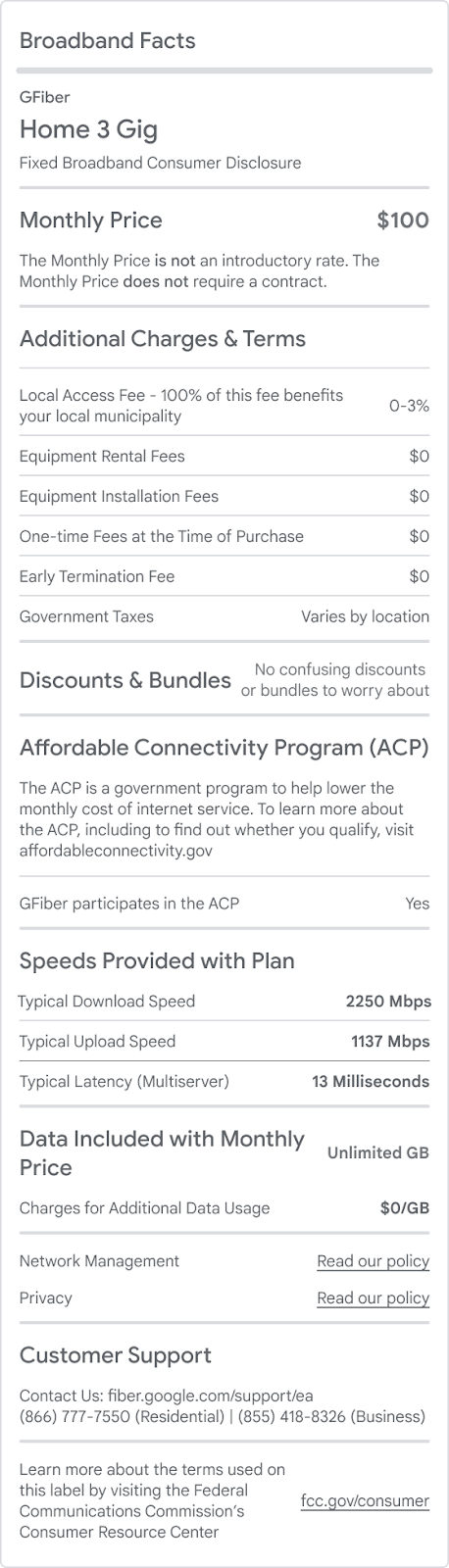
For more information on Edge 8 Gig features and benefits, read Getting the most out of GFiber Edge 8 Gig. 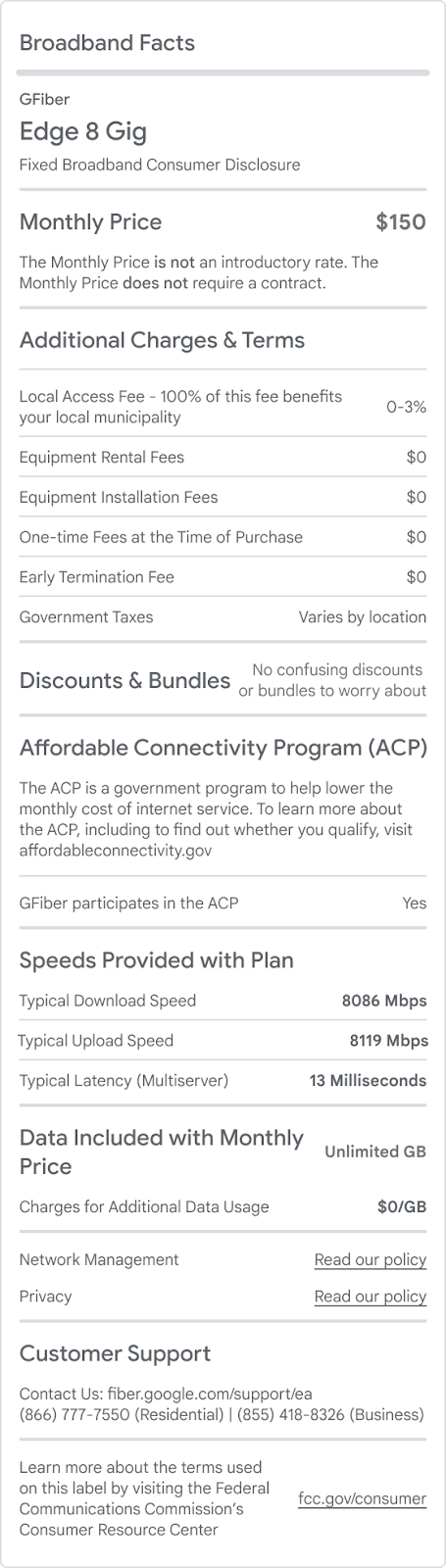
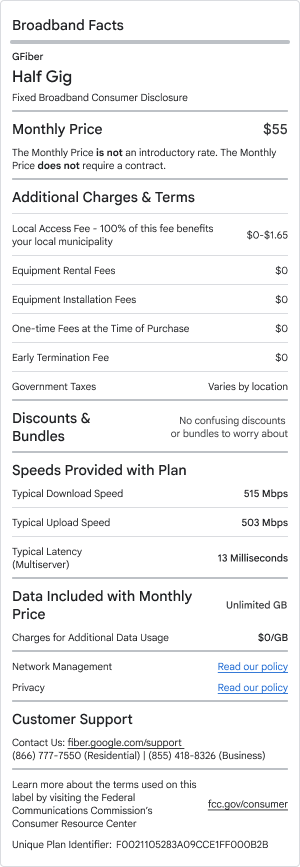
Frequently Asked Questions
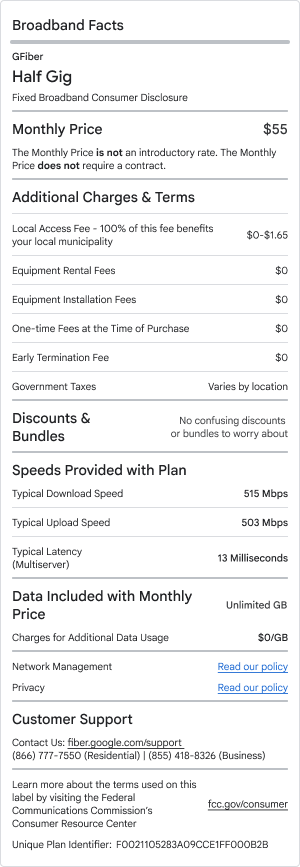
The GFiber Nutrition Label was created because the FCC will soon require all internet providers to display their product info in a standardized format.
The speeds listed on our labels are based on internal tests reflecting the wired speeds you can expect at home using our latest equipment and standard testing methods. These speeds aren’t guaranteed and may vary depending on several factors.
Internet speed is typically measured in megabits per second (Mbps). Higher Mbps indicate a faster connection for transferring information.
Latency (also called ping) is the responsiveness of your internet connection. It refers to the time it takes for your device to receive a response after sending a request. A low latency connection feels more responsive, especially for applications where timing is crucial, like online gaming. Latency is measured in milliseconds (ms).
Our nutrition labels reflect multi-server latency, which is the average median time it takes to reach various external servers (like Ookla, an industry-recognized internet performance analysis company). This provides a more realistic representation of a customer’s experience as they access information from different locations across the internet.
There are a number of factors that can affect your internet speed:
-
Your internet plan: Higher speeds in your plan allow you to transfer more information per second.
-
Your equipment: The age and location of your equipment (router, laptop, etc.) can affect your speed.
-
Connection type: Wired connections generally offer better results compared to Wi-Fi.
-
Network load: The number of devices connected at once can impact your speed.
-
Environmental factors:
-
-
Walls and solid objects can block your Wi-Fi signal.
-
Distance from your router can weaken the signal.
-
Interference from other devices like microwaves, cordless phones, and baby monitors can also affect your speed.
-
With the FCC requirement of nutrition labels, all internet providers will be required to be more transparent with their fees, promotional pricing and typical speeds and latency. This will allow for an apples to apples comparison across providers so that it’s easier to select the best plan for your needs.